
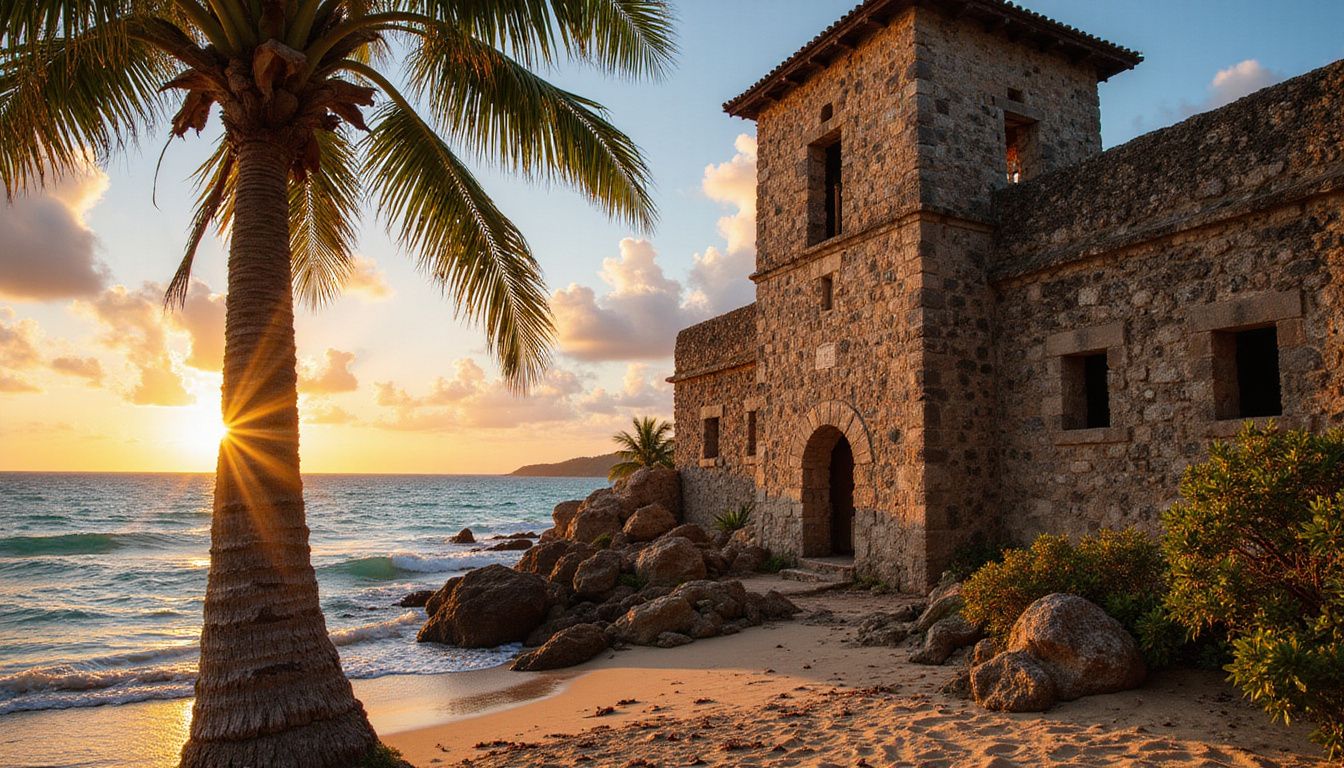
The Dominican Republic’s complex past often confuses visitors and students alike. Many people struggle to understand how this Caribbean nation developed its unique identity through centuries of foreign rule, independence movements, and political upheaval.
The island of Hispaniola has witnessed more dramatic political changes than almost any other place in the Americas.
Christopher Columbus first landed on Dominican shores in 1492, beginning over 500 years of remarkable historical transformation. This timeline will guide you through 16 pivotal moments that created modern Dominican culture, politics, and society.
Each event shaped the nation’s character in ways that still influence daily life today. Prepare to discover how this small island became one of history’s most fascinating crossroads.
Key Takeaways
- Christopher Columbus landed on Dominican shores in 1492, beginning over 500 years of Spanish colonial rule that transformed indigenous TaÃno civilization.
- The Dominican Republic achieved independence from Haiti in 1844 but faced Spanish re-annexation from 1861-1865 before permanent sovereignty was restored.
- Rafael Trujillo’s brutal dictatorship lasted from 1930-1961, ending with his assassination and the heroic sacrifice of the Mirabal Sisters in 1960.
- The United States occupied the Dominican Republic twice (1916-1924 and 1965) during periods of political instability and civil war conflicts.
- Modern democratic stability began in 1996 under Leonel Fernández, ending decades of political turmoil and establishing peaceful power transfers.
The Arrival of Christopher Columbus (1492)
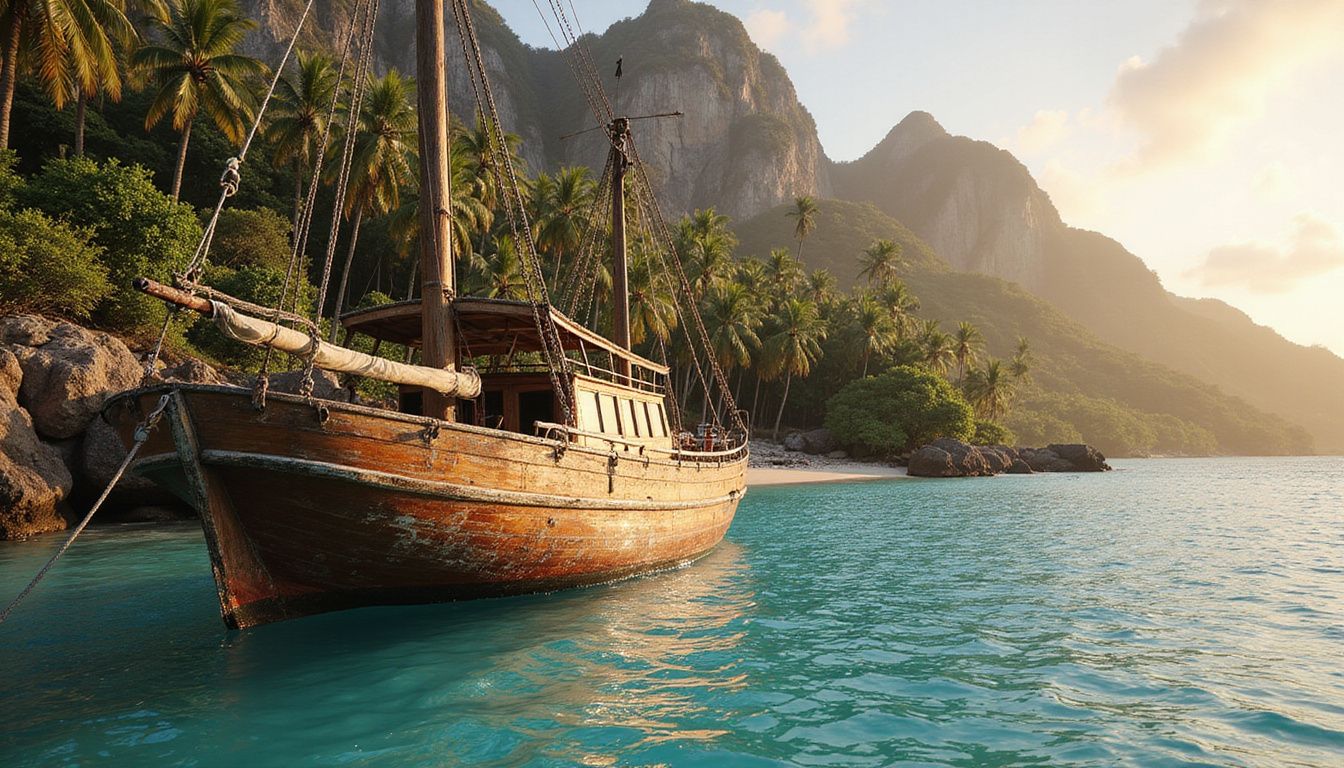
Christopher Columbus landed on Hispaniola’s shores on December 5, 1492, marking the first European contact with what would become the Dominican Republic. This historic arrival initiated centuries of Spanish colonial rule that fundamentally transformed the indigenous TaÃno civilization and established European dominance across the Caribbean region.
The first European landing in the Dominican Republic
Columbus arrived on the shores of Hispaniola on December 5, 1492, during his first expedition to the Caribbean. This historic discovery marked the beginning of European colonization in the Western Hemisphere.
The explorer claimed the island for Spain and established the first contact between European civilization and the indigenous TaÃno people who had inhabited the territory for centuries.
Spanish conquest of Hispaniola transformed the Caribbean landscape forever. Columbus’s landing initiated a wave of exploration and settlement that would reshape the entire region. The indigenous populations faced immediate challenges as European diseases, forced labor systems, and cultural disruption followed the initial contact.
This pivotal moment in 1492 set the foundation for what would become the first permanent European settlement in the Americas, established in Santo Domingo just four years later in 1496.
Founding of Santo Domingo (1496)
In 1496, Bartholomew Columbus established Santo Domingo as the first permanent European settlement in the Americas, creating the foundation for Spanish colonial power that would dominate Hispaniola for centuries and fundamentally reshape the island’s political history through European settlement patterns that still influence Dominican culture today.
Continue reading to discover how this pivotal moment in Dominican history set the stage for centuries of colonization, conflicts, and the eventual struggle for independence that would define the nation’s identity.
The first permanent European settlement in the Americas
Santo Domingo stands as the first permanent European settlement in the Americas, established in 1496 by Spanish colonizers. This historic city marked the beginning of European colonization across the Western Hemisphere and became the foundation for Spanish Empire expansion throughout the Caribbean region.
Christopher Columbus had arrived four years earlier in 1492, naming the island Hispaniola, which encompasses both modern-day Dominican Republic and Haiti.
Spanish settlers chose this strategic location to establish their colonial headquarters, creating a model that would influence future settlements across the continent. The founding of Santo Domingo transformed Hispaniola into the primary base for Spanish operations in the Caribbean, establishing patterns of governance, trade, and cultural exchange that shaped the region’s development.
This settlement became a significant historical center that demonstrates the profound impact of the colonial era on Dominican Republic’s cultural heritage and identity.
The Encomienda System and Colonial Rule
The Spanish crown implemented the encomienda system across Hispaniola, granting colonists control over indigenous labor and tribute collection. This colonial structure devastated native populations through forced labor, disease, and cultural destruction while establishing the foundation for centuries of European dominance in Dominican history.
Impact on indigenous populations
Spanish colonization devastated indigenous populations across the Dominican Republic through systematic exploitation and forced labor practices. Christopher Columbus’s arrival in 1492 marked the beginning of severe cultural disruption that would reshape indigenous societies forever.
Colonial authorities established the Encomienda System, which subjected native peoples to brutal working conditions in agricultural fields and mining activities. Indigenous communities faced immediate displacement from their ancestral lands as Spanish settlers expanded their territorial control.
Population decline among native peoples reached catastrophic levels due to violence, disease, and harsh labor conditions imposed by colonial rule. Spanish mining activities and agricultural expansion destroyed traditional indigenous heritage sites and cultural practices.
Forced labor programs separated families and communities, erasing generations of cultural knowledge and social structures. Colonial exploitation created lasting effects on indigenous identity that persist in modern Dominican society, fundamentally altering the demographic and cultural landscape of the island.
Ephemeral Independence (1821)
Dominican revolutionaries led by José Núñez de Cáceres declared independence from Spain on November 30, 1821, creating the short-lived Republic of Spanish Haiti. This ephemeral independence lasted only nine weeks before Haitian forces under Jean-Pierre Boyer invaded and unified the entire island of Hispaniola under Haitian rule in February 1822.
The short-lived independence from Spain
Ephemeral Independence (1821) marked a brief moment of sovereignty for the Dominican Republic. José Núñez de Cáceres led this independence movement against Spanish colonial rule in November 1821.
This territorial change lasted only five weeks before Haiti occupied the entire island. The revolution demonstrated early nationalism among Dominican leaders who sought autonomy from European colonialism.
Political instability plagued this short independence period due to weak military forces and limited resources. Haiti’s President Jean-Pierre Boyer quickly moved to unify the island under Haitian control in February 1822.
This historical struggle showed how difficult it was for small nations to maintain independence during that era. The occupation that followed would last twenty-two years and bring significant changes to Dominican society.
Haitian Occupation (1822â1844)
In 1822, Haitian forces under President Jean-Pierre Boyer unified the entire island of Hispaniola under Haitian rule, marking the beginning of a 22-year period that profoundly transformed Dominican society through the abolition of slavery, land reforms, and the imposition of Haitian laws and customs that would create lasting tensions between the two nations.
Continue reading to discover how this occupation sparked the Dominican independence movement and shaped the nation’s political identity.
Unification under Haitian rule
The Haitian occupation of the Dominican Republic lasted from 1822 to 1844, marking a crucial period of unification under Haitian rule. Haiti’s President Jean-Pierre Boyer extended his control across the entire island of Hispaniola, bringing significant cultural and political changes to Dominican society.
This occupation influenced the development of Dominican nationalism as residents experienced foreign governance and cultural impositions. The period highlighted the challenges of colonization and the ongoing struggle for autonomy in the Caribbean region.
Dominican resistance grew stronger during these 22 years of Haitian rule, setting the stage for future independence movements. The occupation created lasting tensions between the two nations while shaping Dominican identity through shared hardship and collective opposition.
The Dominican Republic declared independence from Haiti on February 27, 1844, ending this pivotal moment in Dominican history. This historical change demonstrated how political transformation could emerge from periods of foreign occupation and cultural influence.
Dominican Independence (1844)
On February 27, 1844, Dominican revolutionaries led by Juan Pablo Duarte declared independence from Haiti, establishing the Dominican Republic as a sovereign nation. This pivotal moment ended 22 years of Haitian rule and marked the birth of Dominican national identity, though the young republic would face immediate challenges from both internal political divisions and external threats to its newfound freedom.
Founding of the First Republic
The Dominican Republic declared its independence from Haiti on February 27, 1844, marking the founding of the First Republic. This historic moment ended 22 years of Haitian occupation that began in 1822.
Dominican revolutionaries fought to establish sovereignty after experiencing foreign control for decades. The independence movement represented a powerful surge of nationalism among Dominicans who desired freedom from external rule.
Liberation came after years of resistance against colonialism and occupation. The First Republic’s establishment became a significant turning point in Dominican history, as it marked the birth of true nationhood.
Dominican leaders worked to build a republic based on self-governance and national identity. This revolution transformed the Dominican Republic from an occupied territory into an independent nation, setting the foundation for future democratic development and national sovereignty.
Spanish Re-annexation (1861)
The Dominican Republic voluntarily returned to Spanish colonial rule in 1861 under President Pedro Santana’s controversial decision. This Spanish re-annexation marked a dramatic reversal of Dominican independence and sparked widespread resistance among citizens who had fought for their freedom just seventeen years earlier.
Return to colonial status under Spain
President Pedro Santana made a controversial decision in 1861 that shocked the nation. He voluntarily returned the Dominican Republic to Spanish colonial rule, ending the brief independence that began in 1844.
This Spanish re-annexation marked one of the most unusual political moves in Latin American history. Santana believed Spanish protection would solve the country’s economic problems and defend against Haitian threats.
Colonial status under Spain lasted from 1861 to 1865 and created massive political upheaval. Dominican citizens faced harsh Spanish governance that restricted their freedoms and imposed heavy taxes.
Resistance movements quickly formed across the countryside as people rejected the return to colonialism. This period of annexation fundamentally changed the political landscape and sparked the War of Restoration.
Spanish rule proved so unpopular that armed uprisings began within two years, leading to a successful independence movement that restored Dominican sovereignty in 1865.
The War of Restoration (1863â1865)
The War of Restoration (1863-1865) marked the Dominican Republic’s fierce struggle to reclaim independence from Spanish re-annexation, as revolutionary forces led by generals like Gregorio Luperón and Santiago RodrÃguez waged guerrilla warfare across the countryside until Spain finally withdrew its colonial administration.
This pivotal conflict demonstrated the Dominican people’s unwavering commitment to national sovereignty and established the foundation for modern Dominican political identity – continue reading to discover how this revolutionary movement shaped the nation’s destiny.
The successful fight to restore independence
The Dominican Republic launched a fierce revolution against Spanish reannexation in 1863. Armed conflict erupted across the nation as Dominican patriots fought to reclaim their sovereignty from colonial rule.
Spanish forces had controlled the territory since 1861, but growing nationalism sparked widespread resistance. Revolutionary leaders organized guerrilla warfare tactics that proved highly effective against Spanish troops.
Political maneuvering combined with military action created a powerful movement for independence.
Dominican forces achieved complete victory by 1865, establishing the Restoration Republic. This successful fight marked a crucial turning point in the nation’s governance and autonomy.
Restoration efforts strengthened Dominican national identity and proved that small nations could defeat larger colonial powers through determination and strategic planning. Independence became permanent after this conflict, ending cycles of foreign colonization that had plagued the Caribbean nation for decades.
The Era of Caudillos (Late 19th Century)
The Era of Caudillos marked a period of intense political instability as military strongmen fought for control across the Dominican Republic. These power struggles created a cycle of violence and weak governance that prevented meaningful economic development and left the nation vulnerable to foreign intervention.
Power struggles and political instability
The late 19th century Dominican Republic experienced severe political instability as military leaders called caudillos fought for control. These power struggles created constant governance challenges that lasted well beyond the Restoration Republic’s establishment in 1865.
Various caudillos used militarism and autocracy to maintain their authority, leading to frequent changes in leadership and weak national institutions.
Foreign intervention complicated these internal conflicts and undermined Dominican sovereignty. United States occupations influenced local political dynamics and often supported certain leaders over others.
This pattern of instability continued affecting Dominican governance until 1996, creating a legacy of weak democratic institutions. Nationalism emerged partly as a response to these ongoing power struggles, as Dominicans sought to establish stable self-rule and resist external control over their political affairs.
U. S. Occupation (1916â1924)
The United States Marines landed in Dominican Republic in 1916 to restore order during a period of severe political instability and economic crisis. American forces controlled the country’s government, finances, and military for eight years, implementing infrastructure improvements while suppressing Dominican sovereignty and sparking nationalist resistance movements.
American intervention and its impact
American forces occupied the Dominican Republic twice during the 20th century, fundamentally altering the nation’s political trajectory. First intervention lasted from 1916 to 1924, as U.S. military leaders sought to stabilize a country torn by internal political turmoil and civil unrest.
Military governance replaced Dominican autonomy during this eight-year period, establishing new administrative systems and infrastructure projects while suppressing local sovereignty.
Foreign policy decisions made in Washington directly controlled Dominican affairs, creating lasting tensions between nationalism and external influence.
Second intervention occurred in 1965 when American troops returned to prevent what officials perceived as communist government formation during civil war chaos. Military involvement lasted several months but left permanent marks on Dominican governance structures and political consciousness.
These repeated episodes of interventionism sparked intense debates about national independence and foreign influence that continue today. Both occupations strengthened U.S. economic interests while weakening traditional Dominican political institutions, setting precedents for future diplomatic relationships between the two nations.
The Trujillo Dictatorship (1930â1961)
Rafael Trujillo’s brutal dictatorship from 1930 to 1961 stands as one of the darkest chapters in Dominican history, transforming the nation through systematic oppression, economic manipulation, and unprecedented control over every aspect of Dominican life.
His regime eliminated political opposition through violence and intimidation while establishing a cult of personality that renamed cities, monuments, and institutions after himself and his family members.
Trujillo’s secret police, known as the SIM, operated an extensive network of surveillance and terror that reached into every neighborhood, workplace, and social gathering across Hispaniola.
The dictator’s economic policies concentrated wealth in his hands while exploiting Dominican workers and resources for personal gain, creating a system where corruption flourished at every level of government.
His anti-Haitian policies culminated in the 1937 Parsley Massacre, where thousands of Haitians and dark-skinned Dominicans were systemat.
The rise and fall of Rafael Trujillo
Rafael Trujillo seized power in the Dominican Republic in 1930 through a military coup. His dictatorship lasted 31 years until his assassination in 1961. Trujillo’s regime became one of the most oppressive totalitarian governments in Latin American history.
The dictator controlled every aspect of Dominican society through brutal political repression and systematic human rights violations. His authoritarian rule eliminated political opposition and silenced critics through violence and intimidation.
Trujillo’s assassination in 1961 marked the end of three decades of tyrannical governance. The fall of his dictatorship created massive political instability that plagued the Dominican Republic for 35 years until 1996.
His oppressive legacy fundamentally altered the nation’s political landscape and social structure. The Trujillo era remains a pivotal moment that continues to shape Dominican cultural and political dynamics today.
This period of authoritarianism demonstrates how one man’s quest for absolute power can devastate an entire nation’s development and democratic institutions.
The Assassination of the Mirabal Sisters (1960)
The Mirabal sisters’ brutal murder on November 25, 1960, marked a turning point in Dominican resistance against Trujillo’s oppressive dictatorship. Their assassination galvanized opposition movements across Hispaniola and transformed three ordinary women into powerful symbols of courage that would inspire revolutionary movements throughout Latin America.
Symbol of resistance against Trujillo
The assassination of the Mirabal Sisters in 1960 became a powerful symbol of resistance against Rafael Trujillo’s brutal dictatorship. Patria, Minerva, and MarÃa Teresa Mirabal courageously opposed the regime’s oppression through their activism and civil rights work.
Their martyrdom exposed the extreme lengths Trujillo would go to silence opposition voices. These three women transformed from ordinary citizens into national heroes who inspired others to fight against tyranny.
Rafael Trujillo’s regime marked its rule through systematic repression and violence against anyone who dared challenge his authority. The sisters’ brutal murder shocked the Dominican people and revealed the true nature of the dictatorship they lived under.
Their legacy sparked widespread resistance movements that ultimately contributed to Trujillo’s overthrow in 1961. Citizens across the nation began to see that courage could triumph over fear, and their sacrifice proved that even the most powerful dictators could be challenged.
This tragic event set the stage for the dramatic political changes that would follow Trujillo’s death.
Post-Trujillo Political Reforms (1961â1965)
After Trujillo’s assassination in 1961, the Dominican Republic experienced a turbulent transition period marked by rapid political changes and attempts to establish democratic governance.
Multiple coups, provisional governments, and civil unrest characterized this era as various political factions struggled to fill the power vacuum left by three decades of authoritarian rule.
Transition to democracy
The assassination of Rafael Trujillo in 1961 marked a significant shift to political reform in the Dominican Republic. Democracy became the primary goal for political leaders seeking to replace decades of dictatorship with representative government.
Juan Bosch emerged as a key political figure during this transitional phase, influencing the country’s political trajectory toward democratic governance. Political reforms initiated during this period aimed to establish a more democratic government and political landscape that would serve the people’s interests.
Transitional government structures faced considerable instability during this critical period. The post-Trujillo era was characterized by transitional political instability lasting until 1996.
Fear of communism and ongoing political turmoil prompted international concern about the Dominican Republic’s future direction. The 1965 U.S. intervention was prompted by political turmoil and a fear of a communist takeover following Trujillo’s dictatorship.
The Dominican Republic’s struggle for democracy post-Trujillo is part of its broader historical context of military dictatorships and foreign interventions that shaped the nation’s path to stable governance.
Second U. S. Occupation (1965)
In 1965, American forces returned to Dominican soil during a bloody civil war that threatened to install a communist government, marking the second time in fifty years that U.S. Marines occupied the Caribbean nation.
This intervention lasted only months but left lasting scars on Dominican-American relations and shaped the country’s political landscape for decades to come.
Continue reading to discover how this occupation influenced the rise of JoaquÃn Balaguer and the transformation of Dominican politics.
Intervention during the Dominican Civil War
The Dominican Civil War erupted in 1965 following years of political instability after Rafael Trujillo’s assassination in 1961. Military factions clashed as competing groups struggled for control of the government.
Political chaos threatened to destabilize the entire Caribbean region during the height of the Cold War tensions.
The United States launched its second military intervention in Dominican Republic history to prevent what officials perceived as a potential communist takeover. American forces deployed rapidly to restore order and protect U.S. foreign policy interests in the region.
This intervention during the Dominican Civil War demonstrated how Cold War fears drove U.S. foreign intervention decisions, significantly influencing the nation’s governance and historical trajectory for decades to come.
The Balaguer Era (1966â1996)
JoaquÃn Balaguer dominated Dominican politics for three decades through strategic alliances and authoritarian control that transformed the nation’s economic landscape. His administration attracted foreign investment and modernized infrastructure while critics accused his government of electoral fraud and human rights violations that sparked widespread civil unrest.
Economic growth and political controversies
JoaquÃn Balaguer ruled the Dominican Republic from 1966 to 1996, creating a period marked by both economic progress and serious political problems. His government practiced authoritarianism while implementing economic policies that focused on infrastructure development and attracting foreign investment.
These strategies helped create economic stability and growth during his three decades in power. Balaguer’s administration built roads, bridges, and public buildings that transformed the country’s physical landscape.
Critics condemned Balaguer’s repressive tactics and alleged human rights abuses throughout his rule. His government faced constant criticism for limiting political freedoms and suppressing opposition voices.
Supporters pointed to the economic growth and infrastructure improvements as proof of effective governance. The political controversy surrounding his methods created deep divisions in Dominican society.
His contentious legacy reflects the complex relationship between economic development and democratic values that would influence the nation’s path toward modern democratic developments.
Modern Democratic Developments (1996âPresent)
The Dominican Republic entered a new era of political stability in 1996 when Leonel Fernández won the presidency, marking the beginning of genuine democratic transitions and peaceful power transfers.
This period brought significant economic modernization, improved international relations, and strengthened democratic institutions that transformed the nation from its turbulent past into a more prosperous Caribbean democracy.
Shift toward stable governance and modernization
Political stability transformed the Dominican Republic after 1996, marking a decisive break from decades of turmoil that plagued the nation since Trujillo’s assassination in 1961. Democratic reforms established stronger governance structures that enabled systematic modernization across multiple sectors.
Economic development accelerated through improved infrastructure projects and communication advancement initiatives that connected remote regions to urban centers.
Modernization efforts strengthened democratic institutions while fostering cultural evolution throughout Dominican society. Political developments created favorable conditions for sustained economic growth, attracting foreign investment and expanding trade opportunities.
Infrastructure improvements included new highways, upgraded telecommunications networks, and expanded electrical grids that supported business expansion. Communication advancement revolutionized how citizens accessed information and participated in democratic processes, creating a more informed electorate that demanded accountability from elected officials.
These governance improvements set the stage for examining unique Dominican experiences that distinguish the nation’s development path.
Unique Dominican Experiences
The Dominican Republic offers extraordinary vacation experiences through Simply Dominican, a leading Destination Management Company that specializes in villa rentals and real estate across premier destinations.
This expert company provides over 1,000 holiday villas in exclusive locations like Punta Cana and Casa De Campo, creating unmatched accommodation options for discerning travelers. Unique summer experiences await visitors in Punta Cana, while fall activities in the Jarabacoa Mountains provide mountain adventures and cooler climate escapes.
Environmental excellence defines the Dominican coastline, with 26 Blue Flag beaches that meet strict international environmental standards for water quality and coastal management.
These certified beaches represent the highest level of environmental achievement in the Caribbean region. Simply Dominican connects guests with holiday accommodations near these pristine coastal areas, ensuring access to world-class beach experiences that combine luxury with ecological responsibility.
Conclusion
The Dominican Republic’s journey through 16 pivotal historical moments reveals a nation forged by resilience and determination. From Columbus’s arrival in 1492 to modern democratic developments, each event shaped the country’s unique national identity.
Spanish colonization, Haitian occupation, multiple independence movements, and foreign interventions created a complex political history that continues to influence contemporary Dominican society.
Revolutionary movements and key historical figures like the Mirabal Sisters demonstrate how ordinary citizens can spark extraordinary change during times of oppression. Understanding these cultural influences and political milestones helps explain why the Dominican Republic maintains such a distinct character within the Caribbean region.
Consider how these lessons about perseverance through colonialism and civil conflict might apply to modern challenges facing developing nations worldwide. Dominican history proves that even small countries can overcome tremendous obstacles when their people unite around shared values of freedom and self-determination.
Discover more about the island’s charms by exploring these 15 unique Dominican experiences you can’t find anywhere else.
FAQs
1. What are the most significant historical moments that shaped the Dominican Republic?
The Dominican Republic’s formation stems from pivotal events including Christopher Columbus’s 1492 arrival, the Haitian occupation from 1822 to 1844, and Juan Pablo Duarte’s independence movement. The Trujillo dictatorship from 1930 to 1961 fundamentally altered the nation’s political landscape. These sixteen historical moments created the foundation for modern Dominican society and governance structures.
2. How did colonial rule influence Dominican Republic’s development?
Spanish colonial administration established the first European settlement in the Americas on Hispaniola in 1496. This period introduced European legal systems, Catholic religious practices, and agricultural methods that persist today. Colonial influence shaped the nation’s language, architecture, and social hierarchies that define contemporary Dominican culture.
3. What role did independence movements play in shaping Dominican identity?
Juan Pablo Duarte founded La Trinitaria, a secret society that orchestrated the 1844 independence from Haiti. This movement established Dominican sovereignty and created national symbols including the flag and constitution. Independence struggles fostered a distinct Dominican identity separate from neighboring Haiti.
4. How did twentieth-century political changes transform the Dominican Republic?
The Trujillo era brought modernization through infrastructure development while implementing authoritarian control over citizens. Post-Trujillo democratic transitions in the 1960s introduced constitutional governance and civil liberties. These political transformations established the democratic institutions that govern the Dominican Republic today.
